
Cupping in Charlotte — without the wellness-influencer hype.
It's a tool. Not a miracle. Used right, it's the fastest way to free up tissue I can't reach with a needle.
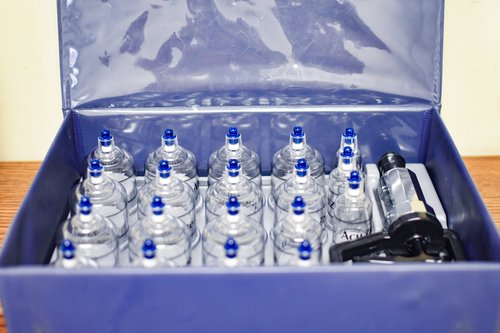
What it actually does
Cupping is not a detox. It doesn't release toxins from your body. What it does: creates negative pressure under a suction cup, which lifts the tissue and creates separation between fascial layers that are stuck together. That separation allows blood to flow into areas that have been restricted, and it releases the myofascial tension that's been driving your tightness.
What those marks are
The circular marks you see after cupping are bruises — capillary rupture caused by the suction. They're not harmful and they fade in 3–7 days. They're also not a sign the treatment is working better. Darker marks mean more superficial restriction, nothing more.
Dr. Britt's take
"I use cupping for myofascial restriction, upper-trap tension, and ITB tightness along the lateral thigh. For those presentations, it's often the fastest way to free up tissue I can't reach with a needle or my hands."
Pricing: Cupping is included in the $75 adjustment + bodywork visit.
Frequently Asked Questions
Does cupping hurt?
The suction feels like a strong pulling sensation. It's not painful for most people.
Are those marks permanent?
No. They fade in 3–7 days.
Is it safe during pregnancy?
With modifications, yes. Tell me during intake.